





Section 179 and Heavy Equipment Financing: How to Lower Your 2026 Tax Bill Before December 31
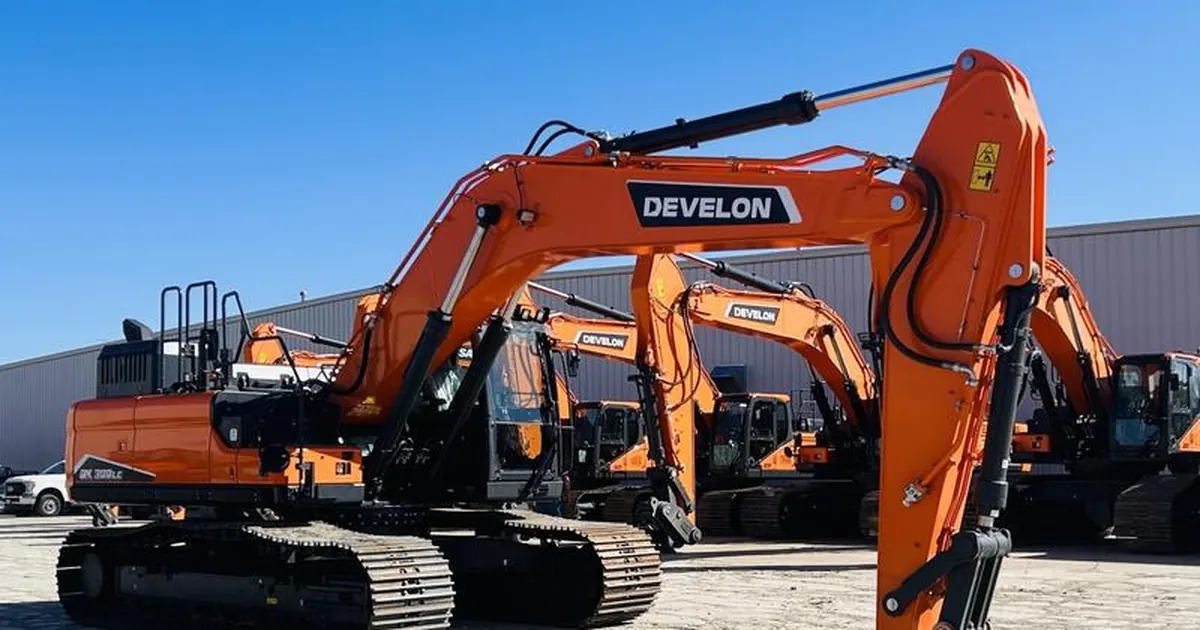
Every December, contractors call wanting a machine delivered before the 31st. Some get it. Some ordered too late, and the deduction they were counting on slides into next year’s return.
This guide covers what Section 179 and bonus depreciation could do for a 2026 equipment purchase. It covers what “placed in service” really means and where heavy equipment financing fits. It also covers the part most dealer blogs skip: how Iowa and Minnesota treat the deduction on the state return. RTL Equipment has sold, rented and serviced heavy equipment across the Upper Midwest since 1988. We’ve watched a lot of year-ends go right and a few go wrong.
What Section 179 Is, in Plain English
Section 179 is a federal tax election that lets a business deduct the cost of qualifying equipment in the year it starts using it, instead of depreciating that cost over several years. The IRS calls it an election to expense certain depreciable assets (IRS Pub. 946, ch. 2).
For a contractor, that means the price of a machine such as an excavator, loader, crusher or crane could come off this year’s taxable income. It doesn’t have to trickle off over seven years.
To qualify, the property has to be eligible property (machinery and equipment count), acquired for business use, and acquired by purchase (IRS Pub. 946, ch. 2). Business use has to be more than 50% (IRS Pub. 946, ch. 2). Between 50% and 100%, you deduct only the business-use share. You can’t buy the machine from a related person. Property you get by gift or inheritance doesn’t count either. You make the election on Form 4562, filed with your return for the year the machine is placed in service (Form 4562 instructions).
The 2026 Section 179 Deduction Limits
For tax years beginning in 2026, the Section 179 deduction limit is $2,560,000. The limit starts to shrink once you place more than $4,090,000 of Section 179 property in service that year. It drops dollar for dollar from there (IRS Rev. Proc. 2025-32, sec. 4.24, released October 9, 2025).
Those are new numbers. The 2025 tax law, Public Law 119-21 (the One Big Beautiful Bill Act), raised the base limits to $2,500,000 and $4,000,000 for tax years beginning after December 31, 2024. It also indexed them for inflation after 2025 (Rev. Proc. 2025-32, sec. 2.10). If a dealer blog still shows $1,220,000 or $3,050,000, it’s out of date.
For most small and mid-size contractors, the ceiling isn’t the constraint. The business income limit is. Your Section 179 deduction can’t exceed your taxable income from the active conduct of a trade or business for the year. Whatever gets cut off carries forward to next year (IRS Pub. 946, ch. 2). In a thin year, that matters.
Bonus Depreciation in 2026 and How It Stacks With Section 179
Bonus depreciation is what the IRS calls the additional first-year depreciation deduction. For 2026 it is 100% for qualified property acquired after January 19, 2025. The 2025 law made that rate permanent (IRS newsroom, Notice 2026-11). Before that, the rate had been stepping down each year (IRS Pub. 946, ch. 3).
The two work together. You elect Section 179 on the machines you choose, up to the limits above. Bonus depreciation then applies to the basis that’s left, and you take it unless you elect out for that class of property (IRS Pub. 946, ch. 3 and ch. 4 worksheet).
Why have both? Section 179 is a machine-by-machine choice capped by business income. Bonus depreciation is automatic for a whole property class and isn’t subject to that Section 179 business income limit. A CPA will usually run the numbers both ways, especially in a tight year or if you file in Minnesota. More on that below.
“Placed in Service” Means Running, Not Ordered
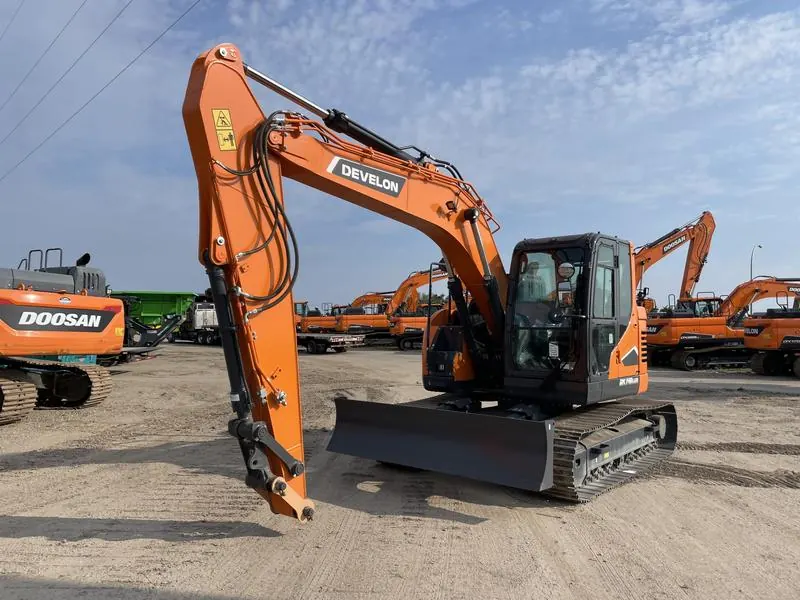
Placed in service means the property is “ready and available for a specific use,” in the IRS’s words (IRS Pub. 946, ch. 1). For a 2026 deduction, that has to happen by December 31, 2026, for calendar-year taxpayers.
A signed purchase order on December 28 doesn’t do it. A paid invoice with the machine still on the dealer’s lot doesn’t do it. The iron needs to be delivered, set up and ready to work.
That’s where December gets tight. Freight has to be scheduled, and so does everyone else’s. Couplers and attachments may need installing. Start the conversation in October or November, not Christmas week.
Used Equipment Qualifies If It’s New to You
Section 179 on used equipment works the same as on new. Nothing in the rules says the machine has to be new. The requirements are eligible property, business use, and purchase from someone who isn’t a related person (IRS Pub. 946, ch. 2). A three-year-old excavator with 2,000 hours meets that test the same way a new one does.
For bonus depreciation, the IRS spells it out: qualified property “can be either new property or certain used property” (IRS Form 4562 instructions). The conditions are that you or a predecessor never used it before and you didn’t buy it from a related party (IRS bonus depreciation FAQ).
That makes RTL’s pre-owned inventory a practical year-end option. A used machine is usually on the lot and ready to ship, which solves the timing problem a new order can run into.
Financed Equipment Still Gets the Full Deduction
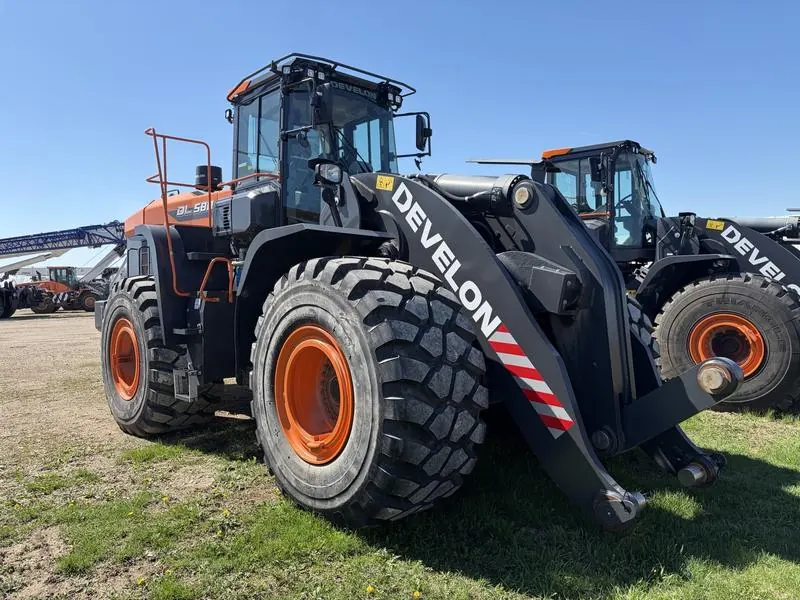
You don’t have to pay cash. The deduction is based on the cost of the property. The IRS says cost basis “includes the amount you pay in cash, debt obligations, other property, or services.” It also says “you are considered as owning property even if it is subject to a debt” (IRS Pub. 946, ch. 1).
For example, a contractor could finance a machine in December and make the first payment in January. The full purchase price could still come off the 2026 return, subject to the limits above. The deduction follows the placed-in-service date, not the payoff date. That’s why construction equipment financing and the Section 179 deadline come up in the same conversation. It’s also why equipment financing for contractors through RTL gets busy in the fourth quarter. Keep the loan documents with your tax records. The paperwork proves ownership and cost.
Renting vs. Buying From a Tax Angle
Rent is deductible, but it’s a different deduction. The IRS defines rent as “any amount you pay for the use of property you do not own.” It’s a business expense only if the rent is for property you use in your business (IRS Pub. 334, ch. 8).
What rent doesn’t get you is Section 179 or bonus depreciation. You can depreciate leased property only if you keep the incidents of ownership (IRS Pub. 946, ch. 1), and a rental machine belongs to the rental company. If your rental deal gives you equity or title, the IRS says you can’t deduct the rent at all (IRS Pub. 334, ch. 8).
So the tax question is really a timing question. Renting spreads a smaller deduction over the months you use the machine. Buying could put the whole cost on this year’s return. Which is better depends on your workload, your cash and your taxable income.
Iowa and Minnesota: What Changes on Your State Return
Federal rules decide the federal deduction. Your state decides whether it follows along. Iowa and Minnesota landed in different places.
Iowa
Iowa has adopted rolling conformity. The state follows changes to the Internal Revenue Code as they happen, except where Iowa law says otherwise (Iowa Revenue, 2025 instructions).
On Section 179, Iowa’s rule states that for 2020 and later, “Iowa limitations are the same as federal” (Iowa Admin. Code r. 701-302.65(2)(c)). On bonus depreciation, the 2025 Iowa form instructions are just as plain. For tax years beginning on or after January 1, 2021, “Iowa fully conforms with bonus depreciation under IRC § 168(k)” (Iowa Revenue, 2025 IA 4562A).
For an Iowa contractor, the federal deduction generally flows through to the Iowa return without an addback.
Minnesota
Minnesota’s 2026 Tax Bill, signed May 27, 2026, moved the state’s conformity date to May 1, 2026, which picks up the 2025 federal law. The Department of Revenue notes Minnesota decoupled from some provisions (Minnesota Revenue, Tax Law Changes, updated June 24, 2026).
Section 179 isn’t one of them. Minnesota stopped requiring a Section 179 addition for property placed in service after December 31, 2019 (Minnesota Revenue, Section 179 addition). The state’s own estimate of the 2025 federal law treats Section 179 as “full conformity, consistent with current law” (Minnesota Revenue fiscal note, December 15, 2025).
Bonus depreciation is different. Minnesota still makes you add back 80% of federal bonus depreciation when you figure Minnesota taxable income. You then subtract 20% of that addback in each of the next five years (Minnesota Revenue, Bonus Depreciation, updated September 29, 2026). The only exception is qualified production property under IRC section 168(n), which is not a construction machine.
So for a Minnesota contractor, whatever you run through Section 179 shows up on the state return the same year. Whatever you run through bonus depreciation gets mostly deferred on the Minnesota return and recovered over five years. That makes the Section 179 election worth more in Minnesota than in Iowa. Raise it with your CPA before you file.
North Dakota, South Dakota, Illinois, Missouri and Kansas each have their own conformity rules. Ask your tax professional.
A Worked Example on a Machine in Stock
This is an illustration, not advice or a promise of savings. Your numbers will differ.
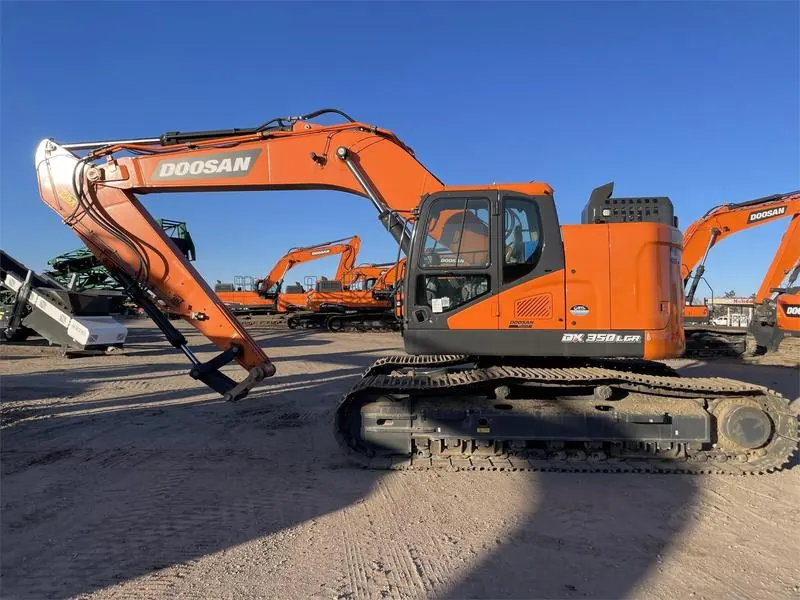
As of October 8, 2026, RTL lists a new 2023 Develon DX350LCR-7 (US20) excavator, stock number 15832, at the Big Lake branch for $219,995. That’s shown as a cash price that includes the coupler and bucket (RTL Equipment listing). Advertised pricing excludes taxes, title, licensing, setup and destination, and is subject to change.
For example, say a contractor filing jointly buys it and places it in service by December 31, 2026. The machine is used 100% for business, and there’s enough business income to absorb the deduction. For a federal rate, use 24%. That’s the 2026 bracket for joint filers with taxable income over $211,400 but not over $403,550 (IRS Rev. Proc. 2025-32, sec. 4.01).
| Item | Illustrative figure |
|---|---|
| Listed price | $219,995 |
| Section 179 election (full cost; well under the $2,560,000 limit) | $219,995 |
| Assumed federal marginal rate (2026 joint-filer bracket, Rev. Proc. 2025-32) | 24% |
| Illustrative federal tax reduction for 2026 | about $52,800 |
The table leaves things out on purpose. It ignores the state return. Iowa would generally follow the federal deduction, and so would Minnesota here, since the whole cost went through Section 179 rather than bonus depreciation. It ignores sales tax and delivery that may be part of your cost basis. It ignores your real bracket, your entity type and any carryover from prior years. That’s your CPA’s job. The table just shows the shape of it.
Year-End Checklist
- Pick the machine. New or pre-owned. If it’s on the lot, most of the timing risk is gone.
- Line up financing early. Credit approval takes time, and so does a December delivery calendar.
- Confirm the delivery date in writing. Ship date and setup date, on paper, with the machine working before the 31st.
- Keep the paperwork. Invoice, bill of sale, delivery ticket, financing documents and the Form 4562 your preparer files.
- Talk to your CPA now. Ask about the business income limit, Section 179 versus bonus depreciation, and how your state handles each. In Minnesota, that last question changes the answer.
Frequently Asked Questions
What is Section 179?
Section 179 is an election that lets a business deduct the cost of qualifying equipment in the year it’s placed in service instead of depreciating it over several years. For tax years beginning in 2026, the limit is $2,560,000, with a phase-out starting at $4,090,000 of property placed in service (IRS Rev. Proc. 2025-32).
Does Section 179 apply to used equipment?
Yes, as long as the equipment is acquired by purchase for business use and not from a related person or by gift or inheritance (IRS Pub. 946, ch. 2). The rules don’t require it to be new. Used equipment can also qualify for bonus depreciation if you never used it before and didn’t buy it from a related party (IRS bonus depreciation FAQ).
Can you take Section 179 and bonus depreciation on the same machine?
Yes. You elect Section 179 on the amount you choose, and bonus depreciation applies to the remaining basis unless you elect out for that class of property (IRS Pub. 946). Bonus depreciation is 100% for qualified property acquired after January 19, 2025 (IRS newsroom).
Can Section 179 create a loss, and what is a Section 179 carryover?
No. The Section 179 deduction is limited to your taxable income from the active conduct of a trade or business for the year. Any amount disallowed by that limit carries over to the next year (IRS Pub. 946, ch. 2). That carried amount is the Section 179 carryover.
Does financed equipment qualify for Section 179?
Yes. The deduction is based on cost, and cost basis includes debt obligations. The IRS treats you as the owner even if the property is subject to a debt (IRS Pub. 946, ch. 1). Financing changes your cash flow, not your eligibility.
Does Minnesota follow Section 179 in 2026? What about Iowa?
Minnesota doesn’t require a Section 179 addition for property placed in service after December 31, 2019. Its 2026 Tax Bill updated conformity to the federal code as of May 1, 2026 (Minnesota Revenue). It still requires an 80% addback of bonus depreciation, recovered over five years (Minnesota Revenue, Bonus Depreciation). Iowa follows the federal Section 179 limits for 2020 and later (Iowa Admin. Code r. 701-302.65) and conforms with bonus depreciation for tax years beginning on or after January 1, 2021 (Iowa Revenue, 2025 IA 4562A).
How long can you finance heavy equipment?
Terms depend on the lender, the machine’s age and hours, and your credit. The term doesn’t change the Section 179 deduction, which follows the year the machine is placed in service. RTL’s finance department can walk you through the options on a specific machine.
Next Step
If you’re thinking about iron before year-end, start with the heavy equipment financing. Apply for financing through RTL, browse new equipment in stock or pre-owned equipment, or contact a branch to confirm a delivery date.
- Swisher, IA (Cedar Rapids area): 319.391.5471
- Grimes, IA (Des Moines area): 515.986.0262
- Big Lake, MN: 763.220.6528
- Crescent, IA (Omaha area): 402.534.1234